
Fresh politics news from Europe
Provided by AGP
Tokyo Unites 55 Global Cities to Boost Climate and Disaster Resilience
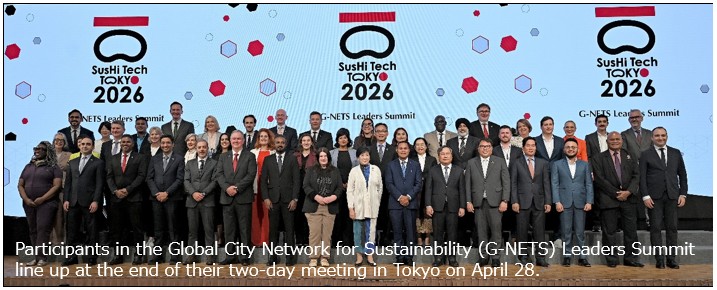
Participants in the Global City Network for Sustainability (G-NETS) Leaders Summit line up at the end of their two-day meeting in Tokyo on April 28.
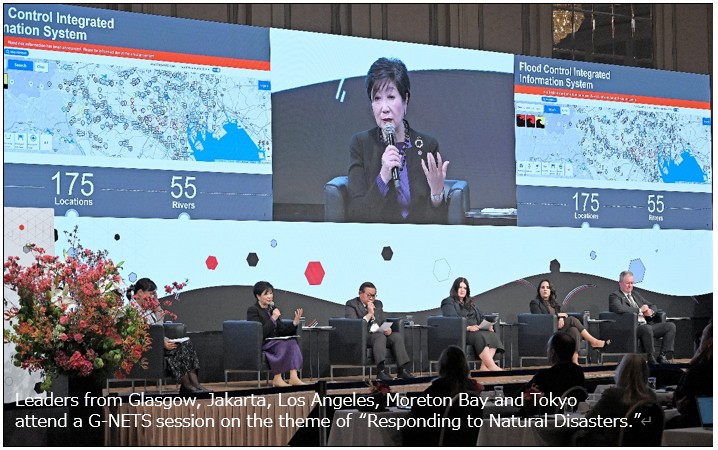
Leaders from Glasgow, Jakarta, Los Angeles, Moreton Bay and Tokyo attend a G-NETS session on the theme of “Responding to Natural Disasters.”
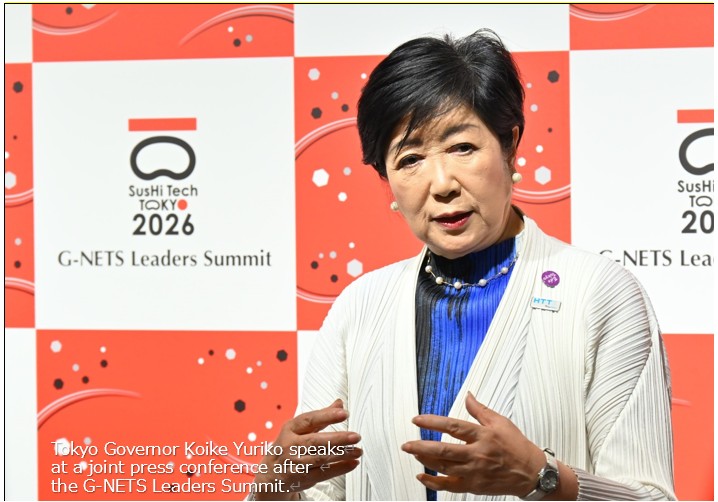
Tokyo Governor Koike Yuriko speaks at a joint press conference after the G-NETS Leaders Summit.
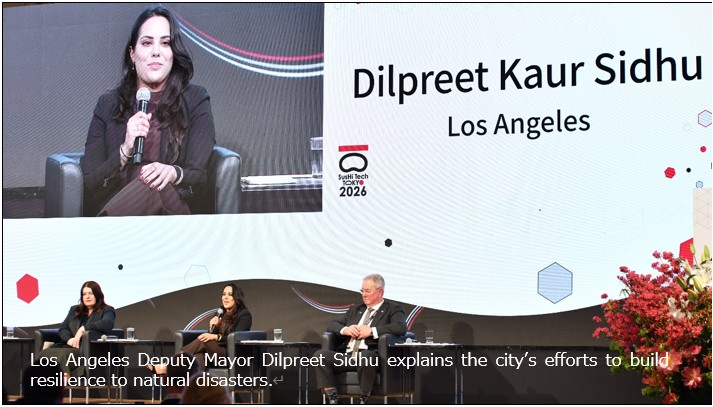
Los Angeles Deputy Mayor Dilpreet Sidhu explains the city’s efforts to build resilience to natural disasters.
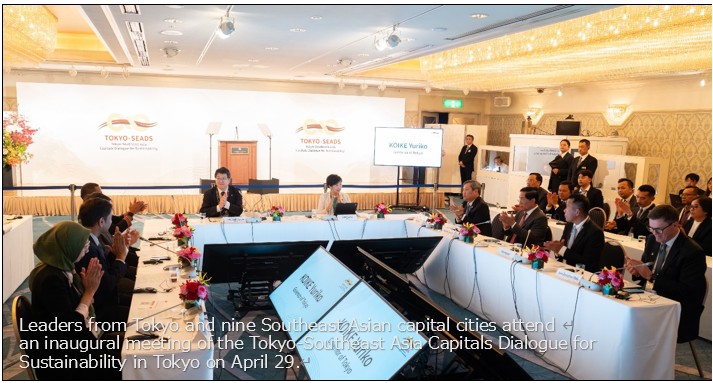
Leaders from Tokyo and nine Southeast Asian capital cities attend an inaugural meeting of the Tokyo-Southeast Asia Capitals Dialogue for Sustainability in Tokyo on April 29.
TOKYO, JAPAN, May 22, 2026 /EINPresswire.com/ -- Leaders from 55 global cities across five continents have pledged closer cooperation to strengthen resilience against climate‑linked natural disasters and address other shared urban challenges towards building a sustainable world.
They made the commitment in a communiqué (joint statement) issued on April 28 after two days of discussions at a city leaders’ conference hosted by the Tokyo Metropolitan Government as part of its annual SusHi Tech Tokyo global innovation conference.
In an annex to the joint statement, the cities participating in the network, called the Global City Network for Sustainability (G-NETS), also announce specific actions each of them will take to build “resilient and sustainable cities.” The initiatives range widely from Helsinki’s target of an 85-percent greenhouse gas emission cut by 2035 to Singapore’s project to reclaim coastal land against rising sea levels
At the conference, the U.S. city of Los Angeles and Christchurch, New Zealand, presented their latest resilience initiatives. Both cities have overcome massive natural disasters themselves—a 2021 wildfire and an earthquake in 2011, respectively. Now, LA prides itself on its “climate leadership” and Christchurch calls itself a “benchmark in urban resilience.”
“Now results cannot be achieved through discussion alone,” Tokyo Governor Koike Yuriko told a joint news conference when she announced the communiqué after the two-day G-NETS Leaders Summit. “And we will work to ensure that the discussions that have taken place here are firmly translated into action.”
During the 4th edition of SusHi Tech Tokyo, the Tokyo Metropolitan Government also launched a dialogue group with Southeast Asian capitals to discuss strengthening their cooperation. The dialogue, named Tokyo-Southeast Asia Capitals Dialogue for Sustainability (TOKYO-SEADS), focused on “Storm and flood countermeasures” and “Urban infrastructure development” at its inaugural meeting on April 29.
Communiqué: SusHi Tech Tokyo 2026 G-NETS Leaders Summit
20260428_sushi-tech-tokyo-2026-g-nets-leaders-summit-communique-pdf
Save the Cities from ‘Increasingly Frequent and Severe’ Disasters
The G-NETS joint statement says, “Across the globe, increasingly frequent and severe natural disasters are occurring right before our eyes.” It adds that the phenomena are “presenting urgent, shared issues that the world’s cities must confront together in order to safeguard the lives and assets of our residents.”
The participating cities—more than half of them capitals such as Buenos Aires, Hanoi, Helsinki, Nairobi and San Salvador—also agreed to “promote the real-world application of cutting-edge technologies through supporting and utilizing startups, with the aim of enhancing urban climate and disaster resilience.”
They intend to “advance solutions to shared urban challenges with the aim of realizing a sustainable world,” according to the communiqué.
Metro Manila, which covers the Philippine capital of Manila and surrounding cities with a total of 14 million residents, appreciated that the G-NETS Leaders Summit has provided it with an “opportunity to network, collaborate and learn from the best practices of other cities,” Metro Manila Development Authority Chairman Romando Artes told the joint news conference. He further added that this “very valuable” experience enables Metro Manila to be “adaptive and resilient.”
Samuel Elías Let, Chief of Zone 1, City of San Salvador (the capital of El Salvador), said: “Every action we take in climate resilience, innovation and urban development must ultimately improve the lives, safety and opportunities of our citizens.”
In its announcement of resilience action, Tokyo pledges to accelerate the construction of underground “regulating reservoirs” to bring their cumulative storage capacity to 3.65 million cubic meters by fiscal year 2035 “to protect residents from increasingly severe and frequent torrential rains.” At present, the capacity stands at about 2.73 million cubic meters.
Discussions Filled with ‘Great Enthusiasm’
“Cities face a wide range of disasters,” Governor Koike told Japanese reporters after the summit. “Given that there are so many commonalities—such as our shared experiences, technologies, regulations and methods of communicating information—everyone participated in the discussions with great enthusiasm.”
A former member of national parliament, who headed the defense and environmental ministries, Governor Koike is in her ninth year as the first female chief executive of the capital city. She has advocated “multicity lateral cooperation” in recent years, assuming in January the chair of the Champion Mayors for Inclusive Growth—the city leaders’ coalition of the OECD (Organisation for Economic Co-operation and Development).
The G-NETS forum has been organized by the Tokyo Metropolitan Government since 2022, uniting the world’s leading cities to solve pressing urban challenges. Environmental sustainability, disaster resilience, inclusivity, well‑being, digital innovation, and culture have been in focus with shifts in emphasis.
This forum has been held in conjunction with SusHi Tech Tokyo, which has grown into Asia’s largest innovation conference since its debut in 2023, at three levels: mayors/governors, senior officials and working-level staff.
This year’s meeting—held at the level of top leaders including 20 mayors and governors—featured two primary themes: “Urban Climate and Disaster Resilience” and “Well-being in Cities.”
At next year’s SusHi Tech Tokyo event in May 2027, G-NETS will hold a meeting of senior officials to pass on this momentum to its next Leaders Summit in 2028.
LA Proud of ‘Climate Leadership’
The joint statement goes in great detail about measures against natural disasters, “climate change measures and harmony with the environment,” and support for startups. It also touches on the well-being of citizens with regard to support for children and parents, the empowerment of women, promotion of tourism, culture, entertainment and sports, utilization of digital technology and initiatives for an inclusive society.
Nine sessions were held in two days on the themes of “Responding to Natural Disasters,” “Promoting Culture, Sports and Entertainment,” “Realizing Inclusive Societies,” “Promoting Decarbonization,” “Promoting Greenery” and “Harnessing AI and Digital Technologies.”
Los Angeles, the second largest U.S. city, and Christchurch, the largest city on New Zealand’s South Island, stood out with presentations on urban resilience initiatives based on their experiences of massive natural disasters.
Over 25 days in January 2021, a wildfire killed 12 people and destroyed 6,800 structures in what is remembered as the “worst wildfire in LA history,” driven by drought and strong Santa Ana winds.
Dilpreet Sidhu, Deputy Mayor of International Affairs for Los Angeles, told a session that her city is in “a shift from disaster response to proactive risk reduction through planning and stronger infrastructure.” The city released its latest climate action plan in mid-April that defines its “roadmap to climate resilience, cleaner energy, green jobs and carbon neutrality by 2045.”
“It builds on about two decades of LA’s climate work,” Sidhu said. “We are leaders in the United States in terms of EV (electric vehicle) charging infrastructure as well as battery storage. So we really feel proud of our climate leadership, both in the U.S. and abroad.”
Christchurch: ‘A Benchmark in Urban Resilience’
Christchurch has bounced back from the devastation of an earthquake that killed 185 people and destroyed historic buildings including a cathedral in the city center in 2011.
Following a “very comprehensive inquiry,” the city was rebuilt with a “significant strengthening of our building codes and our compliance measures and also of our engineering practices,” Christchurch Deputy Mayor Victoria Henstock said.
“Christchurch is now a city transformed as it is more livable, it is safer. We have a very compact city center. We have a thriving tourism industry,” she said. “Ultimately, the story of our city really is a benchmark in urban resilience.”
In the annex to the joint statement, other G-NETS participating cities say what each of them will do to become “resilient and sustainable.”
One of them, the Scottish city of Glasgow will strengthen flood risk management through major public investment, de-risking development sites and expanding resilient infrastructure over the next decade. “We will deliver adaptation measures for homes and businesses, enhance blue-green networks, and deepen cross sector partnerships to support coordinated action that builds long term climate resilience across the city,” says Glasgow City Council Leader Susan Aitken.
Vietnam’s capital of Hanoi says it pioneers the digital era through an “AI First” strategy, positioning data as a “core resource.” “With a citizen-centric approach, Hanoi commits to building a smart government and innovating governance to ensure transparent, agile services, fostering inclusive, equitable and sustainable development,” says Vu Dai Thang, Chairman of Hanoi People’s Committee.
The winter Olympic city of Turin, Italy, vows to lead an ecological transition over the next decade “towards an increasingly green, inclusive and sustainable city model.” “The goal is to achieve net-zero emissions and zero land take while strengthening urban forestry, focusing on proximity and ’15-minute neighborhoods,’ and consistently monitoring results and progress,” says Turin Mayor Stefano Lo Russo.
Tokyo, Southeast Asian Capitals Form a Dialogue Group
The newly formed dialogue group between Tokyo and Southeast Asian capitals, TOKYO-SEADS, held its first meeting on April 29 with the representatives of 10 cities—Tokyo, Bangkok, Dili, Hanoi, Jakarta, Kuala Lumpur, Manila, Phom Penh, Singapore and Vientiane—attending.
In a joint statement, they agreeded to further advance various measures with the aim of “creating a resilient and sustainable urban future.” The measures include storm and flood countermeasures, urban infrastructure development, renewal and maintenance, and “usage of digital technology in the aforementioned areas.”
The joint statement also commits the SEADS cities to take practical initiatives: 1) share good practices and information; 2) implement joint projects such as technical cooperation and training; 3) advance concrete measures; and 4) monitor progress and share results.
“Although Tokyo and cities in Southeast Asia have different urban structures and backgrounds, we face various shared challenges, including intensifying natural disasters caused by worsening climate change, infrastructure development and renewal, aging populations, and the enhancement of residents’ well-being,” the joint statement says.
“The threat of natural disasters, including storms and floods, has notably been growing in recent years,” the document says. “In order to firmly safeguard the lives and assets of our residents, it is of the utmost importance for Tokyo and Southeast Asian cities, which are geographically close and have active exchanges with one another, to further enhance multicity lateral cooperation and advance practical measures for learning from each other.”
Speaking to reporters after the meeting, Governor Koike noted that Southeast Asian cities are already utilizing AI in their administrative processes. “I found this information very helpful.”
“I believe that in Tokyo as well, by continuing to accumulate data on operations such as opening and closing floodgates, we will be able to find effective ways to utilize AI,” she said.
YouTube: TOKYO-SEADS meeting
https://www.youtube.com/watch?v=3Ez4G_WL8j0
Strategic PR Section, Strategic PR Division
TOKYO METROPOLITAN GOVERNMENT
email us here
Legal Disclaimer:
EIN Presswire provides this news content "as is" without warranty of any kind. We do not accept any responsibility or liability for the accuracy, content, images, videos, licenses, completeness, legality, or reliability of the information contained in this article. If you have any complaints or copyright issues related to this article, kindly contact the author above.
